

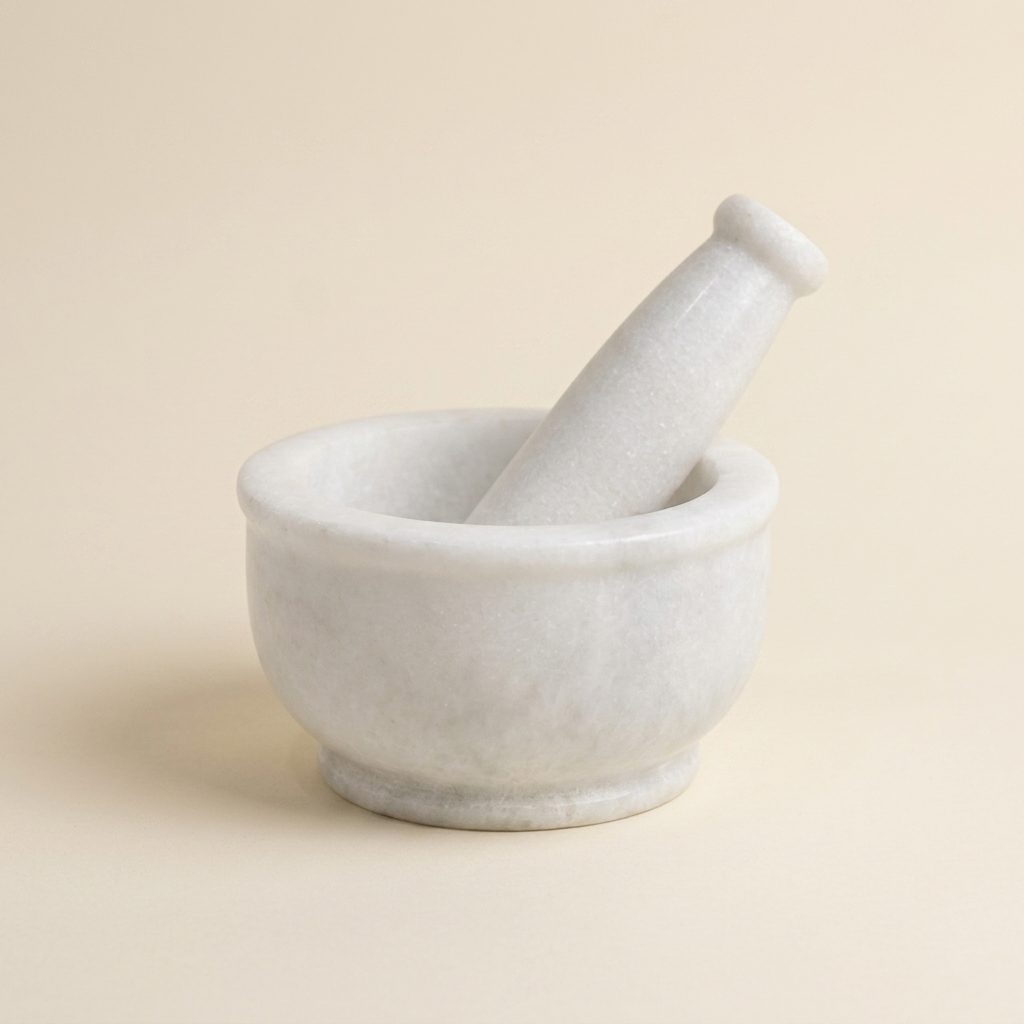
Mortar and Pestle, Wonder White — 8 Inches, Marble
₹2,000
Every Indian kitchen has kept one within reach — the imam dasta, cut from a single block of marble and worked by hand until the bowl sits heavy and true. Stone grinds cold. Unlike a mixer it never heats the spice, so the oils stay in the masala instead of burning off, which is exactly why ginger-garlic paste, fresh chutney and hand-cracked garam masala still taste better out of one. Ours are shaped by the same Himachal stone workers who carve our murtis, in green, white and brown marble from a compact 4-inch kharal to an 8-inch okhli built for festival cooking.
₹2,000
₹1,500
₹999
₹699
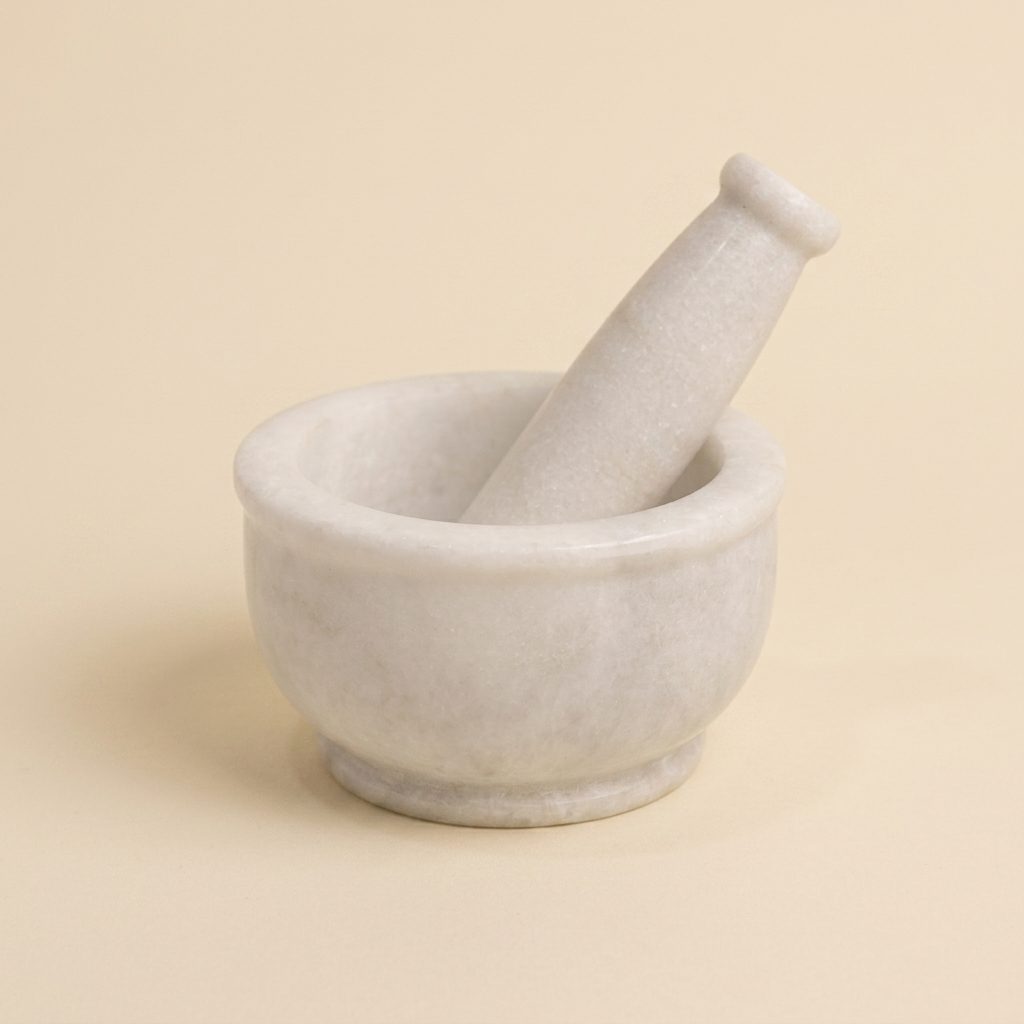
₹499
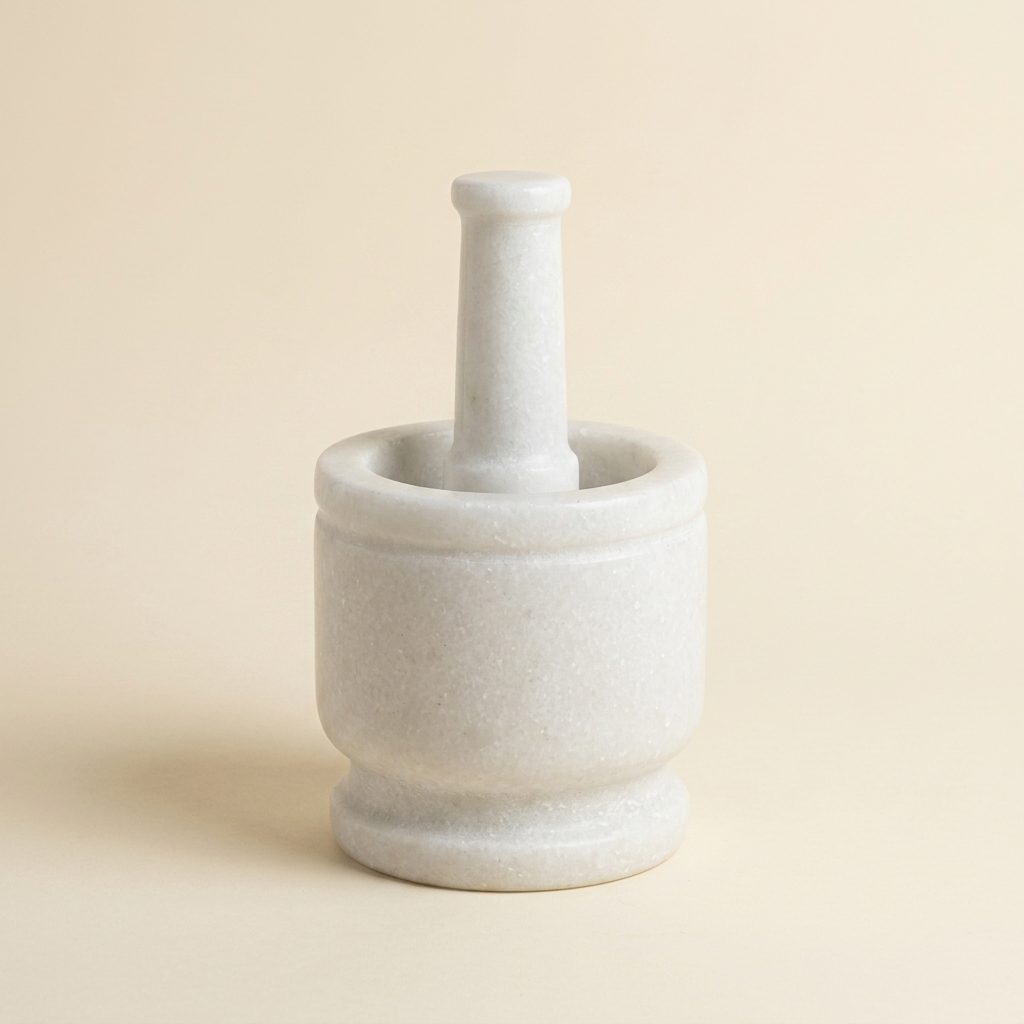
₹1,199
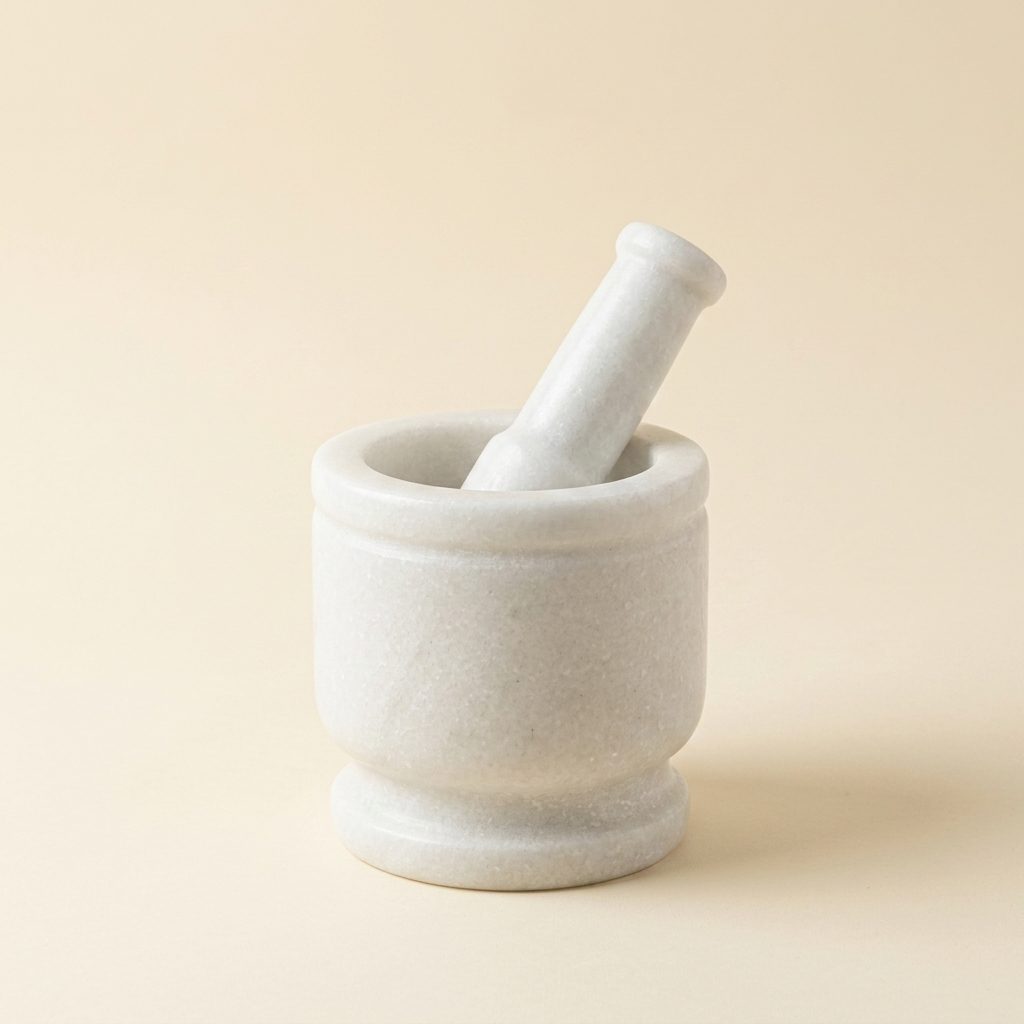
₹999
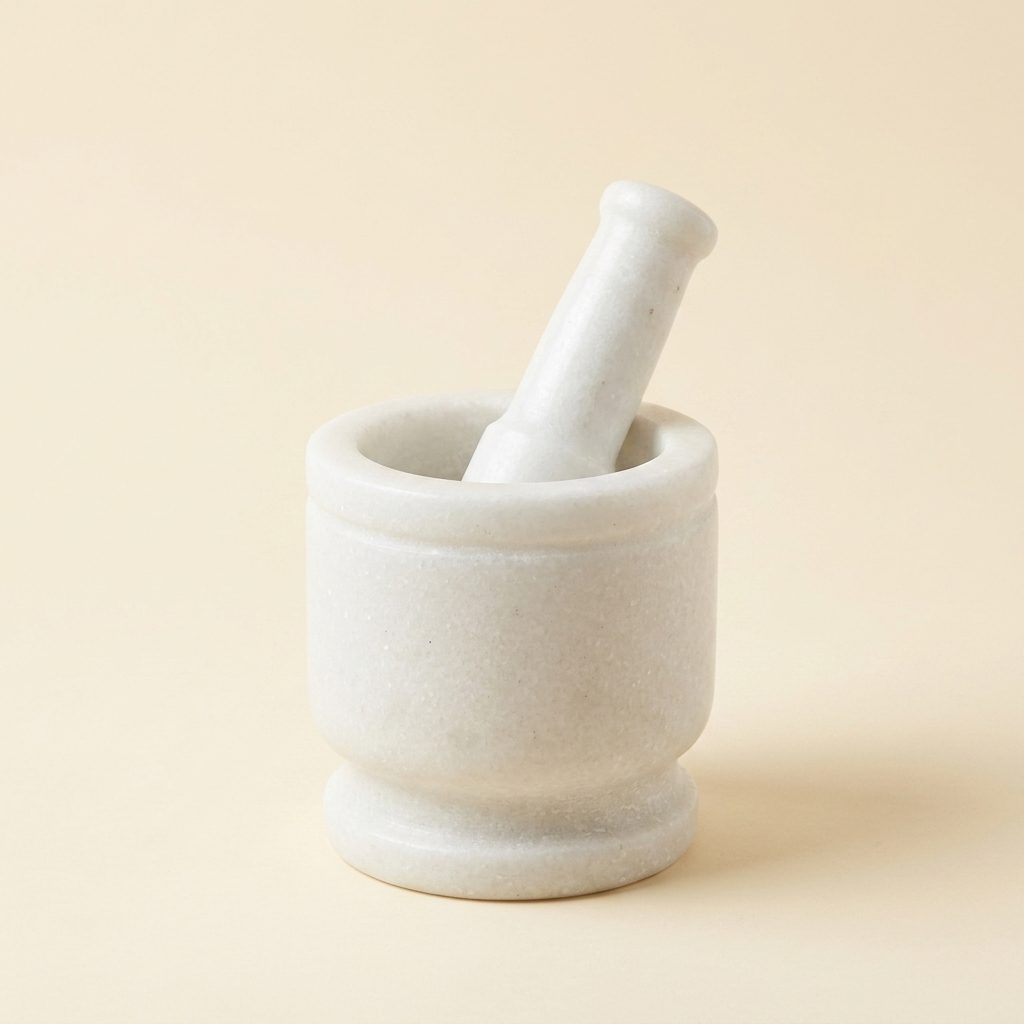
₹699
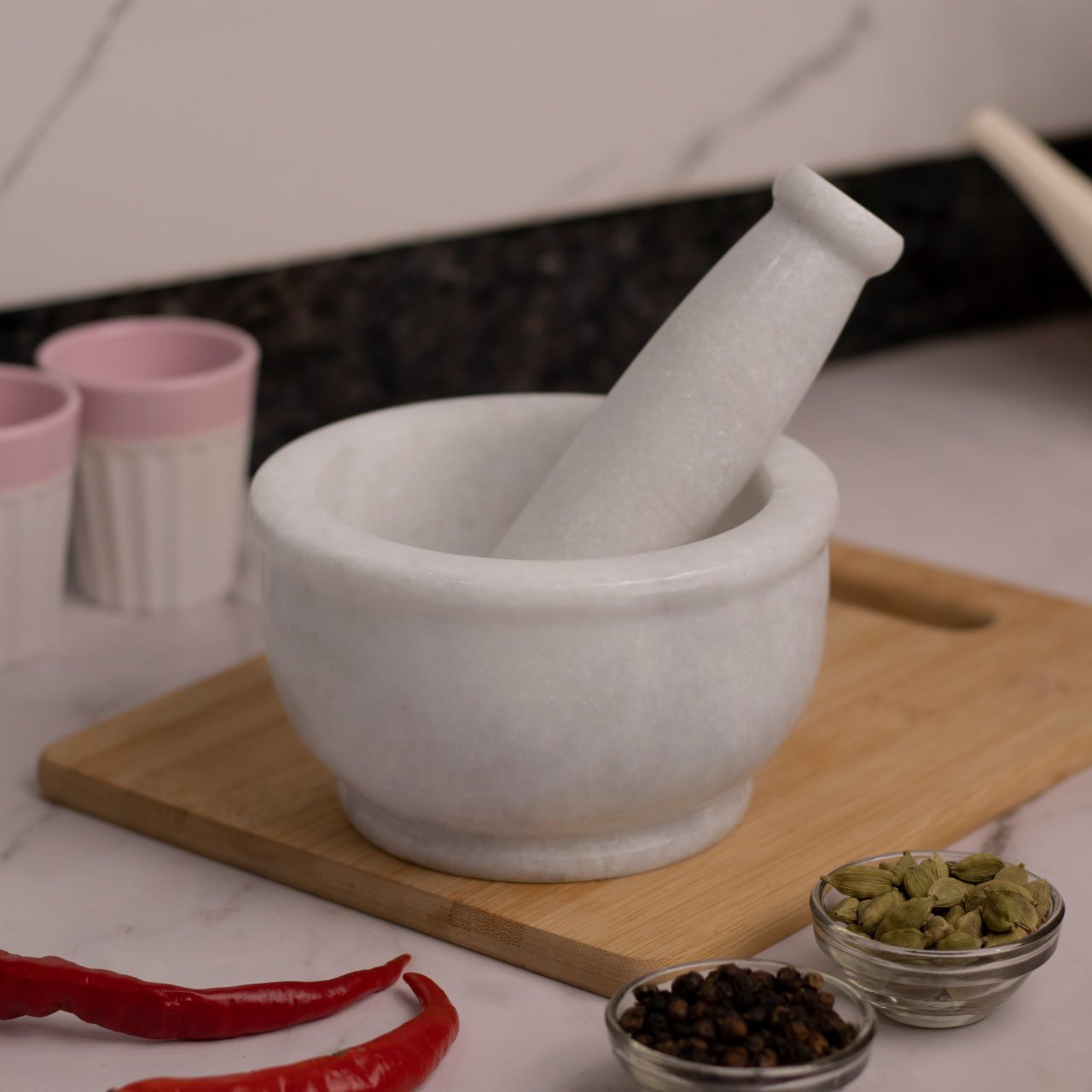
A marble mortar and pestle — imam dasta, kharal or okhli depending on where in India you grew up — is the one grinding tool that improves with use rather than wearing out. Gharana’s range is hand-carved from natural marble in three stones: green marble for hardness and stain resistance, white marble for a bright interior that keeps saffron and dry herbs visible, and brown marble for the deepest tone and easiest upkeep. Sizes run 4, 5, 6, 7 and 8 inches; 6 inches suits most households. Because each piece is cut from natural stone, the veining and weight vary slightly from one to the next. Looking for more of the kitchen? Browse our home and kitchen range, or explore hand-carved marble murtis from the same workshops.
It is the traditional Indian mortar and pestle — a heavy stone or metal bowl with a matching hand-held pestle, used to crush whole spices, herbs and wet masala. The same tool is called a kharal in parts of North India and an okhli when it is large; a flat grinding stone with a roller is a sil batta.
Six inches suits most households — deep enough to hold a fistful of whole spices without spilling, still light enough to carry to the sink. Choose 4–5 inch if you mainly grind small quantities like saffron or cardamom, and 7–8 inch if you regularly make wet masala or cook for a large family.
Yes. Marble is dense and non-reactive, so it will not absorb odours or take on the flavour of what you ground last, and its weight does most of the work for you. It also grinds cold, which keeps the aromatic oils in the spice rather than driving them off as heat does.
Rinse with warm water and a stiff brush, then let it air-dry completely. Do not use soap — the stone is porous and will hold it. To season a new piece, grind a spoonful of raw rice to a powder and discard it, repeating until the powder comes out white; this clears any loose stone dust from carving.
Close, but not identical. Every piece is cut from natural stone, so the veining, depth of colour and exact weight differ slightly from one mortar to the next — that variation is the mark of real marble rather than a moulded composite.